Company Profile


Shanghai Crystal Wells Chemical New Materials Co., Ltd.

Was established in 2010 with a registered capital of 73.155 million yuan. It is a high-tech enterprise specializing in the production of rubber additives, pre-dispersed masterbatch and so on. The company is located in Jiashan Zheshang Science and Technology Park. It is in the center of Shanghai, Hangzhou, and Suzhou, enjoying convenient transportation, a superior environment, and complete supporting facilities.

Product advantages


  •  

    Environmental protection

    The use of pre-dispersed masterbatch to replace ordinary powder processingaids can reduce and eliminate chemical smoke and dust flying.

  •  

    Energy Saving

    The use of pre-dispersed masterbatch can improve the dispersion effect andprocessing performance, improve product quality, ease of use, reduce themixing temperature.

  •  

    Excellent Dispersion

    Increasing the dispersion degree,reducing the dispersion time and meeting thereguirement of modern rubber of continous mixing at low temperature.

Company News


How Does NOBS-80 Improve Scorch Safety in Rubber Vulcanization?
03 Nov 2026

How Does NOBS-80 Improve Scorch Safety in Rubber Vulcanization?

Scorch safety is an important consideration in rubber processing, especially when compounds are exposed to heat during mixing, extrusion, calendaring, and other shaping operations. If vulcanization be

View Detail
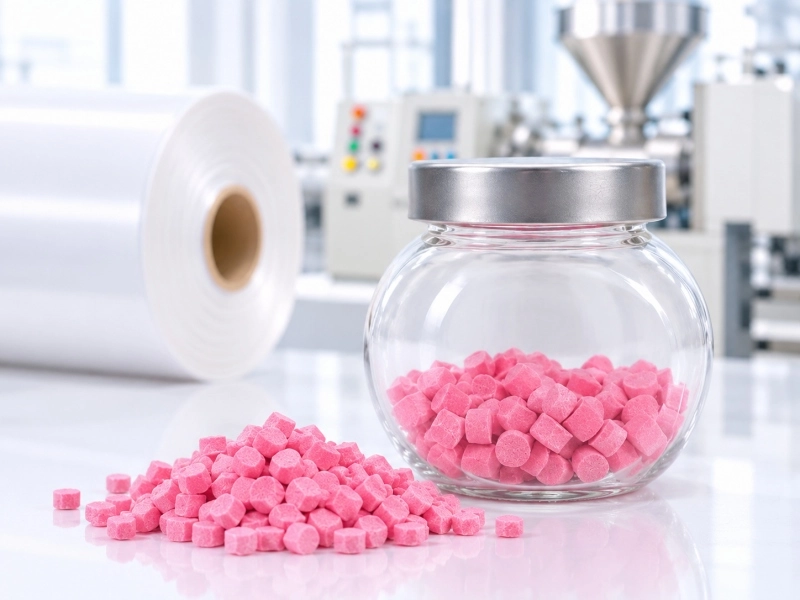
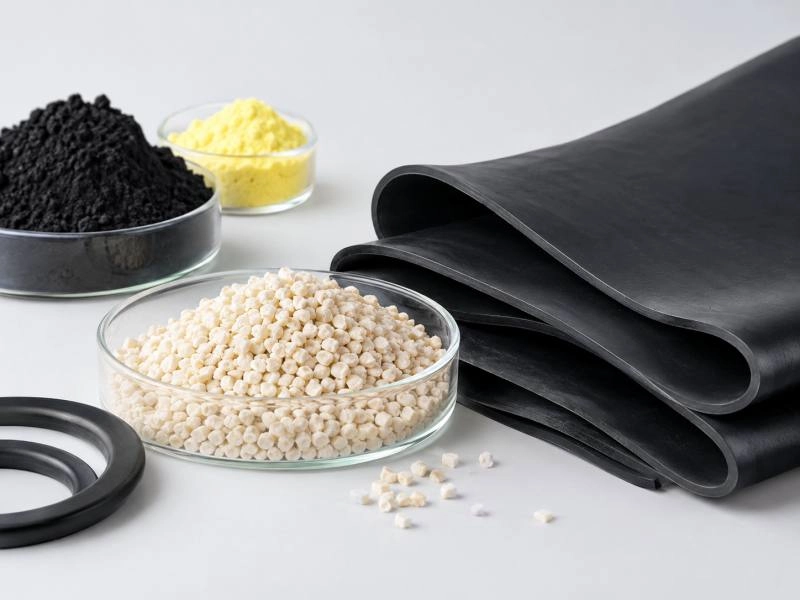
CTP(PVI)-80 Scorch Retarder Masterbatch: Run Compounds Faster Without Premature Scorch
03 Nov 2026

CTP(PVI)-80 Scorch Retarder Masterbatch: Run Compounds Faster Without Premature Scorch

Scorch is one of the costliest incidents in the mixing room: a batch that crosslinks too early means rework at best and scrap at worst, and it can even clog extruders and calenders.

View Detail
How Does TBBS(NS)-80 Work in Low-Sulfur Rubber Vulcanization?
29 Oct 2026

How Does TBBS(NS)-80 Work in Low-Sulfur Rubber Vulcanization?

Sulfur vulcanization plays an essential role in developing the elasticity, strength, and durability of rubber products. However, increasing sulfur content does not necessarily lead to better performan

View Detail
OBSH vs AC Blowing Agent for Microcellular Rubber: Shoe Soles, Seals & Density Control
28 Oct 2026

OBSH vs AC Blowing Agent for Microcellular Rubber: Shoe Soles, Seals & Density Control

A side-by-side look at OBSH and azodicarbonamide (AC) to help compounders pick the right foaming agent for microcellular soles and seals.

View Detail
Scorch Retarder CTP/PVI for Complex Extrusion & Thick-Section Molding: Safety & Processing Window
26 Oct 2026

Scorch Retarder CTP/PVI for Complex Extrusion & Thick-Section Molding: Safety & Processing Window

How N-cyclohexylphthalimide (CTP/PVI) extends scorch safety for complex profiles and thick rubber goods without sacrificing final properties.

View Detail
Resorcinol Adhesive System for Steel Cord & Fabric Reinforcement: RF-70, RA-65 in Tires & Belts
19 Oct 2026

Resorcinol Adhesive System for Steel Cord & Fabric Reinforcement: RF-70, RA-65 in Tires & Belts

A guide to building rubber-to-metal and rubber-to-fabric bond strength with pre-dispersed resorcinol-formaldehyde resin and cobalt/nickel activator masterbatches.

View Detail
Non-Nitrosamine Accelerator System for Medical & Food Grade Rubber: TBzTD, ZDBDC & DPG-Free Formulations
14 Oct 2026

Non-Nitrosamine Accelerator System for Medical & Food Grade Rubber: TBzTD, ZDBDC & DPG-Free Formulations

How to build a compliant cure for medical, food-contact and infant rubber goods without nitrosamine-generating accelerators.

View Detail
ZnO-80 Masterbatch vs Zinc Oxide Powder: Dosage, Dust-Free Mixing & Cost Reduction
14 Oct 2026

ZnO-80 Masterbatch vs Zinc Oxide Powder: Dosage, Dust-Free Mixing & Cost Reduction

A practical comparison for tire and hose compounders weighing the switch from powdered zinc oxide to an 80% pre-dispersed masterbatch.

View Detail
How Does CBS(CZ)-80 Work with Secondary Rubber Accelerators?
13 Oct 2026

How Does CBS(CZ)-80 Work with Secondary Rubber Accelerators?

Rubber vulcanization requires a careful balance between processing safety, curing efficiency, and final mechanical properties. While a primary accelerator can provide the foundation for sulfur vulcani

View Detail

+8613706519013