+8613706519013
 BHC Polymer Additives Co., Ltd / Shanghai Crystal Wells Chemical New Materials Co., Ltd.

Rubber Plasticizer
Rubber Plasticizers
Tight extrusion tolerances and complex mold shapes demand better flow from a compound, without giving up final strength once it's cured. This category covers two products that work at opposite ends of a product's life: RUBBER PLASTICIZER A improves processability and filler dispersion while the compound is being mixed and shaped, and Protective Wax ML19 protects the finished, vulcanized product from ozone attack once it's in service.
They aren't alternatives to each other — many compounds use both, at different stages of the formulation, for different jobs.
Product Comparison
| Parameter | RUBBER PLASTICIZER A | Protective Wax ML19 |
|---|---|---|
| Composition | Zinc fatty acid soap | Refined paraffin wax and microcrystalline wax blend |
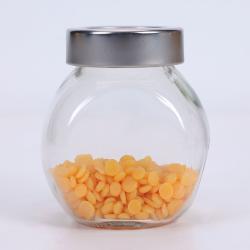
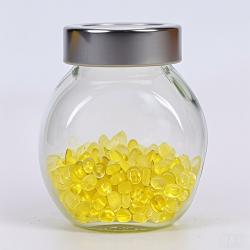
| Appearance | Light yellow particles | White to light yellow flake-like particles |
| Key Physical Properties | Iodine value 40–50 g/100g; initial melting point 98–104°C; ash 12–14%; Zn (as ZnO) content 12–14% | Freezing point 61–67°C; carbon peak at C32; optimal film-forming temperature ≈30°C |
| Role in the Compound | Plasticizer, activator, and internal/external lubricant during mixing and extrusion | Physical antiozonant — migrates to the surface of the cured product to form a protective wax film |
| Recommended Dosage | 2–5 phr | Not specified — contact our technical team for guidance based on your protection requirements |
What Each Product Actually Does
RUBBER PLASTICIZER A improves processing, start to finish
It promotes carbon black dispersion and shortens mixing time, lowers extrusion temperature while improving extrusion speed and semi-finished surface smoothness, boosts vulcanization activity to shorten cure time, and improves flow and density during vulcanization — a multifunctional additive that touches nearly every processing stage from mixing through demolding.
Protective Wax ML19 protects the finished product
Rather than acting during processing, ML19 forms a wax film on the surface of the cured rubber at a medium rate, adapting to a wide temperature range to provide medium- to long-term ozone protection — suitable for most tire applications.
Frequently Asked Questions
1. Are RUBBER PLASTICIZER A and Protective Wax ML19 interchangeable?
No — they solve different problems at different stages. RUBBER PLASTICIZER A is a processing aid used during mixing and extrusion; Protective Wax ML19 is a surface-migrating antiozonant that protects the cured product in service. Many formulations use both.
2. Why does RUBBER PLASTICIZER A contain zinc?
As a zinc fatty acid soap, it combines plasticizing and lubricating action with a mild activating effect on cure chemistry, which is part of why it can improve vulcanization activity and shorten cure time alongside its processing benefits.
3. What does "carbon peak at C32" mean for Protective Wax ML19?
It describes the dominant hydrocarbon chain length in the wax blend, which governs how and when the wax migrates to the rubber surface. ML19's C32 peak and roughly 30°C optimal film-forming temperature give it a medium migration rate, positioning it for medium- to long-term protection across a wide temperature range rather than very fast or very slow-blooming protection.
4. Does Protective Wax ML19 replace a chemical antioxidant?
No — it works by a different, physical mechanism (forming a barrier film) rather than the chemical mechanism antioxidants use. Waxes and chemical antioxidants are typically used together, since waxes protect against static ozone exposure while antioxidants address broader oxidative and thermal aging.
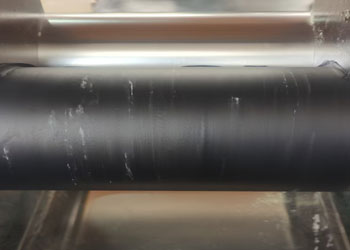
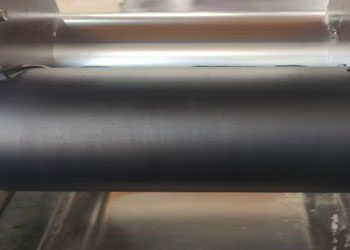
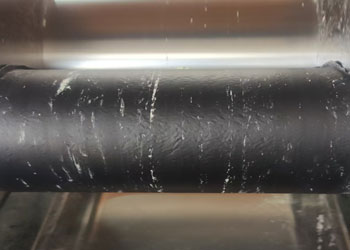
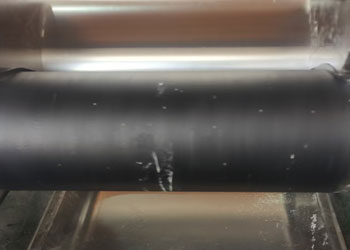
Comparison of roll kneading performance with powder products
Comparison of roll kneading performance with powder products |
| 10 seconds later | 30 seconds later | 60 seconds later | |
| MASTERBATHCES | 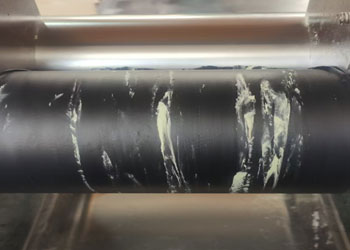 |
 |
 |
| POWDER | 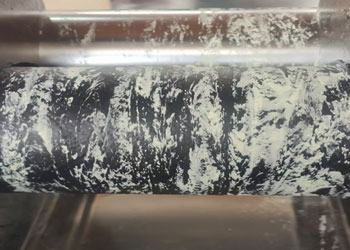 |
 |
 |